

• Contact Us
    • Ελληνικά
    • English
    • Türkçe

    Logo Logo

    • The Patriarch
      • Welcome Message
      • Biography
      • Messages
      • Encyclicals
      • Homilies and Speeches
      • Letters
      • Publications
      • Private Patriarchal Office
      • Official Photographs
    • The Patriarchate
        History
        • A BRIEF HISTORY OF THE ECUMENICAL PATRIARCHATE
        • LIST OF PREVIOUS PATRIARCHS
        • The Patriarchal Church
        • The Patriarchal Court
        • Historical Patriarchal Collections
        • Patriarchal Archive and Library
        Administrative Structure
        • THE HOLY AND SACRED SYNOD

          • COMPOSITION OF THE HOLY SYNOD
          • CHIEF SECRETARIAT OF THE HOLY SYNOD
          • SYNODAL DECISIONS
          • SYNODAL LETTERS AND ENCYCLICALS
        • HIERARCHY OF THE ECUMENICAL THRONE

          • METROPOLITANS AND ARCHBISHOPS
          • METROPOLITANS IN THE EPARCHIES OF THE "NEW LANDS"”
          • TITULAR METROPOLITANS AND ARCHBISHOPS OF THE THRONE
          • EPARCHIAL BISHOPS OF THE THRONE
          • AUXILIARY BISHOPS OF THE THRONE
          • Retired Hierarchs of the Throne
          Synodal Committees
        • GRAND CHANCELLERY
        Institutes - Organizations
        • Patriarchal Institutes
        • Patriarchal Organizations
        • Theological School of Halki
    • EPARCHIES of the Throne
        EPARCHIES
        • Archdiocese of Constantinople
        • Holy Metropolises in Turkiye
        • Holy Metropolises in Greece
        • Other Eparchies in Europe
        • Eparchies in America
        • Eparchies in Asia
        • Eparchies of Oceania
        • Autonomous Churches
        • Patriarchal and Stavropegic Monasteries
        Map


    • News
        News Reports
        • Press Reseases
        • Announcements
        • PATRIARCHAL AUDIENCES AND REPRESENTATIONS
        • NEWS FROM THE DIOCESES
        • VARIOUS SPEECHES (FULL TRANSCRIPTS)
        • Interviews
        • LIVE BROADCASTS/VIDEO
        • Photographs
        Activities
        • Patriarch's Itinerary
        • Schedule
        ORTHODOXIA Periodical
        • Latest Issue
        • Previous Issues
        Office of Press and Communications
    • Resources
        HOLY AND GREAT COUNCIL
        • Official Documents
        • Pre-Conciliar Documents
        • Patriarchal Homilies
        • Speeches and Addresses
        Interfaith and Academic Dialogues
        • Dialogue Between the Orthodox Church and Judaism
        • Dialogue Between the Orthodox Church and Islam
        • Interfaith Meetings - Conferences
        Orthodoxy and the Environment
        • Messages of September 1st
        • Patriarchal Homilies
        • Halki Summit
        • Ecological Symposia
        • Common Declarations
        Orthodoxy and bioethics
        Theological, Historical and other texts
        Various Speeches (Full Transcripts)
        Autocephaly of the Orthodox Church of Ukraine
        • Tome of Autocephaly
        • Decisions of the Holy Synod
        • Speeches
        • Historical Documents and reflections
        • Memorandum of Collaboration
        • Announcements
        • Interviews
        Interchristian Relations
        • Dialogue with the Roman Catholic Church
        • Dialogue with the Anglican Communion
        • Dialogue with the Old Catholic Church
        • Dialogue with the Lutheran Evangelical Churches
        • Dialogue with the Evangelical Church In Germany (EKD)
        • Dialogue with the Lutheran Church In America
        • Dialogue with the Reformed Churches
        • Dialogue with the Ancient Eastern Churches
        • Participation of the Ecumenical Patriarchate in the World Council of Churches (WCC)
        • Participation of the Ecumenical Patriarchate in the Conference of European Churches (CEC)
        • Joint Declarations and Communiques
    • Venerable Patriarchal Church of St. George
      • BRIEF HISTORY
      • Divine Services in the Patriarchal Church
      • Photographs
      • Schedule of Divine Services
    • Holy Temples
      • Archdiocese of Constantinople
      • Dioceses of the Patriarchate
    1. Home
    2. The Patriarch
    3. Homilies and Speeches
    4. ADDRESS By His All-Holiness Ecumenical Patriarch Bartholomew On the Occasion of the 50th Anniversary of Pro Oriente (November 8, 2014)

    Blog

    ADDRESS By His All-Holiness Ecumenical Patriarch Bartholomew On the Occasion of the 50th Anniversary of Pro Oriente (November 8, 2014)

    Posted on 18/03/2016

    Your Eminence, Christoph Cardinal Dr. Schönborn,
    Dr. Johann Marte, esteemed President of the Pro Oriente Foundation,
    Your Excellencies, most reverend church leaders and distinguished civil authorities,
    Dear friends,

    It is indeed a particular privilege and honor to be invited to address you on the auspicious occasion of the 50th anniversary of the Pro Oriente Foundation. This event marks a special and significant milestone in the history of relations between the Roman Catholic Church and the Eastern Orthodox Churches. In many ways it is a mirror of the relations between our Churches inasmuch as it reflects and parallels the extraordinary steps of rapprochement and reconciliation that began half a century ago and have led to the theological dialogue and sincere exchanges between us on the parish and local, regional and national, as well as international levels.

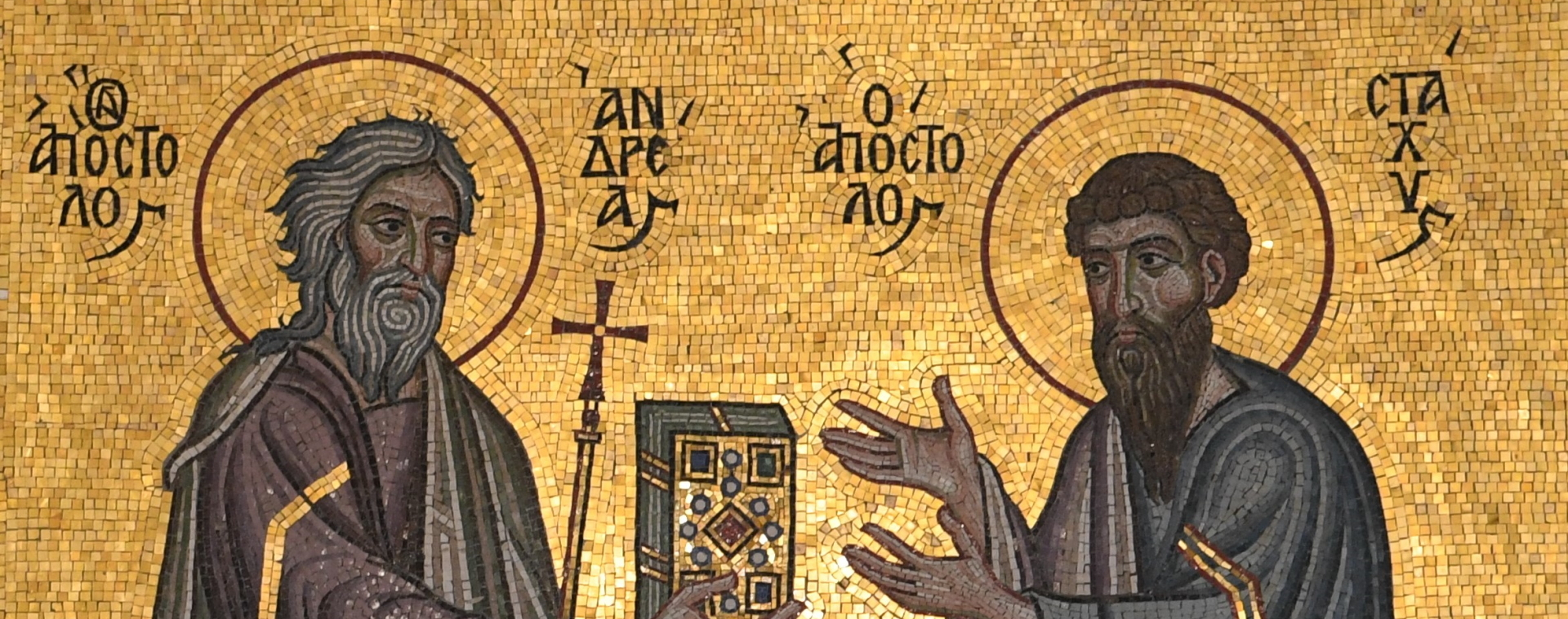
    As you are all aware, in a few days, our beloved brother in Christ, Pope Francis, will visit Istanbul, which has served as the sacred center and see of the Ecumenical Patriarchate for over seventeen centuries. We very much look forward to welcoming His Holiness to the Phanar on November 30th for the commemoration of St. Andrew the first-called of the Apostles and Thronal Feast of the Church of Constantinople. This official visit follows in the wake of our joint pilgrimage to Jerusalem only a few months ago to celebrate another 50th anniversary, namely the journey to the Holy Land by the late Pope – now officially proclaimed Saint in the Roman Catholic Church – Paul VI and Ecumenical Patriarch Athenagoras. We were deeply touched that Pope Francis accepted our invitation for a common observance of that occasion, which we proposed to him during our own attendance at his solemn Inaugural Mass in March 2013.

    Dear listeners, these instances are not purely coincidental; nor again are they merely historical. We would dare to say that they are in fact nothing less than providential. Fifty years ago, such events would not have been conceivable or even achievable. It is surely the grace of God that inspired our venerable and visionary predecessors to assume these bold initiatives. In some ways, after so many years of estrangement and silence, only the Spirit of God could possibly bring about the conditions and circumstances for greater partnership and closer relations between our Churches, which were previously alienated for an entire millennium.

    It is precisely within such an atmosphere of ecumenical openness and sincere desire for dialogue that the Pro Oriente Foundation was envisaged and established in 1964 by the Viennese bishop, the late Franz Cardinal  König, who discerned the spirit of the times and perceived the importance of adhering to the commandment and prayer of our Lord, “that [His disciples] may be one.” (John 17.21) The sacred purpose and fundamental goal of the Foundation – with its various charters in Vienna, Graz, Salzburg and Linz – was to improve relations between the Roman Catholic and Eastern Orthodox as well as Oriental Orthodox Churches, echoing the papal decree “Unitatis Redintegratio” issued on November 21, 1964. Its founding president was the renowned and respected Alfred Stirnemann, who led the Foundation until his death in 1988. We remember both of these leaders, together with our cherished departed friends, the late Metropolitans Chrysosotomos and his successor Michael of Austria, Patriarchal Exarchs of Hungary and Mid-Europe. These two Orthodox hierarchs were unconditionally convinced of the essential role of positive relations with the Roman Catholic, working tirelessly toward advancing dialogue and enhancing cooperation. May their memory be eternal and may their example be a model for us all!

    Let us, however, recall some of the groundbreaking steps taken just over fifty years ago, which in turn led to the fertile conditions for the creation of a foundation such as Pro Oriente. In the opening days of 1964, Pope Paul VI and Ecumenical Patriarch Athenagoras broke a silence of many centuries with just a few simple words and a loving embrace. On January 5, 1964, when Pope Paul VI met with Ecumenical Patriarch Athenagoras on the Mount of Olives, it was the first time the Western pontiff and the Eastern primate – the Pope of Rome and the Archbishop of New Rome – were meeting face-to-face since the Council of Florence in 1438. And the venue for the encounter in 1964 was the very site where Christ addressed His Father on the night of His betrayal for the unity of His followers.

    Prior to this meeting, for many centuries the Eastern and Western Churches had no formal contact and little unofficial communication. After what is today known as the “great schism” of 1054, there were two brief encounters of exchange and dialogues of reunification at the Council of Lyons in 1274 and at the Council of Ferrara-Florence in 1438-39; yet both occasions left feelings of bitterness rather than hopefulness. The estrangement was further accentuated and sealed after the tragic events of the Crusades, especially the Fourth Crusade with the sack of Constantinople in 1202-04 with the unjustifiable slaughter of Christians by Christians.

    Thus began the historical “dialogue of love” – a term coined by the late Metropolitan Meliton of Chalcedon – which in turn initiated a process of gradually breaking down barriers created over centuries. It was followed one year later – in a joint declaration read simultaneously at St. Peter’s in Rome and in the Patriarchal Church of St. George in Istanbul – by the unprecedented “mutual lifting of the anathemas” on December 7, 1965, when the same two prelates “removed from both the memory and the midst of the Church the sentences of excommunication” dating back to 1054, agreeing that “the past be confided to the mercy of God.”

    The year 1969 saw the beginning of a paramount and hitherto uninterrupted tradition, namely the exchange of formal annual delegations at the respective Patron Feasts of our two “sister churches” – in Rome on June 29 for the feast of Saints Peter and Paul; and in Istanbul on November 30, which Pope Francis will honor at the end of this month. These momentous initiatives later culminated in the creation – during the papal visit to the Phanar on November 30, 1979 – of the Joint International Commission for Theological Dialogue between the Roman Catholic Church and the Orthodox Church. Thus, the Holy See and fourteen autocephalous Orthodox Churches commenced an official theological “dialogue of truth” on May 29, 1980 – during the tenure of our revered predecessor, the late Ecumenical Patriarch Dimitrios and the successor to Pope Paul VI, the late Pope John Paul II – in order to expand the “dialogue of love” and examine jointly the doctrinal differences between the two sister Churches.

    Thankfully today, through the important and influential contribution of such foundations and institutes as Pro Oriente, this spirit of fraternal love and mutual respect has replaced the old theological polemic and reciprocal suspicion. Of course, we are realistic enough to recognize that much remains to be achieved, and the path sometimes seems long and laborious. There are the thorny theological issues of primacy and collegiality, which are currently on the table for deliberation; and there is the delicate problem of Uniatism, which has already once suspended the dialogue. However, we must confess that there is no alternative path to dialogue and reconciliation.

    This is especially valid and true for our age, when we encounter the global use and abuse of religion for political and other secular purposes; the difficulties facing Christians all over the world – particularly in the Holy Land and the Middle East, regardless of confessional identities; the injustices inflicted on the weak and vulnerable members of contemporary societies; as well as the alarming ecological crisis which threatens the integrity and very survival of God’s creation. All of these challenges call for a common and collaborative solution to the problems that still divide us. They demand our mutual cooperation and shared concern.

    Indeed, we might also include here another aspect of Pro Oriente, which is implied in its very identity, namely the responsibility and advocacy of Christian minorities persecuted in the Middle East and Northern Africa, in the very places where Christianity emerged and flourished from the earliest years of our Church. After all, the term “orient” is not only an ecclesiastical designation; it is also a geographical specification. This dimension is surely part and parcel of the mission and ministry of Pro Oriente, and we would gladly welcome its support in this vital area. And we are all well aware of the critical situation and unjustifiable suffering endured by our brothers and sisters in the Middle East and Northern Africa.

    As we declared jointly in Jerusalem with His Holiness Pope Francis: “We express our shared profound concern for the situation of Christians in the Middle East and for their right to remain full citizens of their homelands. In trust we turn to the almighty and merciful God in a prayer for peace in the Holy Land and in the Middle East in general. We especially pray for the Churches in Egypt, Syria, and Iraq, which have suffered most grievously due to recent events. We encourage all parties regardless of their religious convictions to continue to work for reconciliation and for the just recognition of peoples’ rights. We are persuaded that it is not arms, but dialogue, pardon and reconciliation that are the only possible means to achieve peace.” Permit us paternally to urge you to focus more of your attention toward this crisis.

    Eminent and beloved friends,

    The ecumenical work of Pro Oriente has proved invaluable and instrumental for the promotion of closer and stronger relations between our Churches. Its work has undoubtedly been both remarkable and admirable. Yet, as we all know, in our world, the work of unity remains constant and unceasing until the fullness of the heavenly kingdom. It is, therefore, our humble vocation and moral obligation to continue and reinforce our efforts toward reconciliation. Let us not simply preserve the memory of the pioneers of this blessed Foundation; let us carry on their example and increase their endeavors. For this would be the best commemoration and celebration of their legacy and longing for Christian unity.

    May God bless you all – those directly involved in as well as those who fervently pray for and support the work of the Pro Oriente Foundation.

    Latest News

    CATECHETICAL HOMILY For the Opening of Holy and Great Lent (2026)

    17/02/2026

    Schedule of Sacred Services of the Holy Twelve days of Christmas at the Patriarchal Church (2025-2026)

    22/12/2025

    Patriarchal Encyclical for Christmas 2025

    20/12/2025

    Love in Action at the Phanar: How the Ecumenical Patriarchate Cares for Its Flock

    19/12/2025

    Useful Links

    • Ancient Patriarchates
    • New Patriarchates
    • Autocephalous Churches

    Follow Us


    Terms of use
    Privacy Policy

    Navigation

    • The Patriarch
    • The Patriarchate
    • News
    • Resources
    • The Patriarchal Church
    • Holy Churches and Pilgrimages

    Contact

    Postal Address

    Rum Patrikliği, Dr. Sadık Ahmet Cad. No. 19,
    34083 Fatih-İstanbul, TURKIYE
    Tel: +90 (212) 531.9670 – 6

    Office of Press And Communications

    Director – Nikolaos-Georgios Papachristou
    Email: ecpatr.pressoffice@gmail.com

    Copyright © 2026 Ecumenical Patriarchate

    This website uses cookies to improve your experience. We'll assume you're ok with this, but you can opt-out if you wish. Cookie settingsACCEPT Reject
    Privacy & Cookies Policy

    Privacy Overview

    This website uses cookies to improve your experience while you navigate through the website. Out of these cookies, the cookies that are categorized as necessary are stored on your browser as they are essential for the working of basic functionalities of the website. We also use third-party cookies that help us analyze and understand how you use this website. These cookies will be stored in your browser only with your consent. You also have the option to opt-out of these cookies. But opting out of some of these cookies may have an effect on your browsing experience.
    Necessary Always Enabled

    Necessary cookies are absolutely essential for the website to function properly. This category only includes cookies that ensures basic functionalities and security features of the website. These cookies do not store any personal information.

    Website is under development

    New content will be added soon
    We are sorry for the inconvenience


    Continue in the greek version

    Η ιστοσελίδα είναι υπό ανάπτυξη

    Σύντομα θα προστεθεί και νέο περιεχόμενο
    Λυπούμαστε για την ταλαιπωρία